

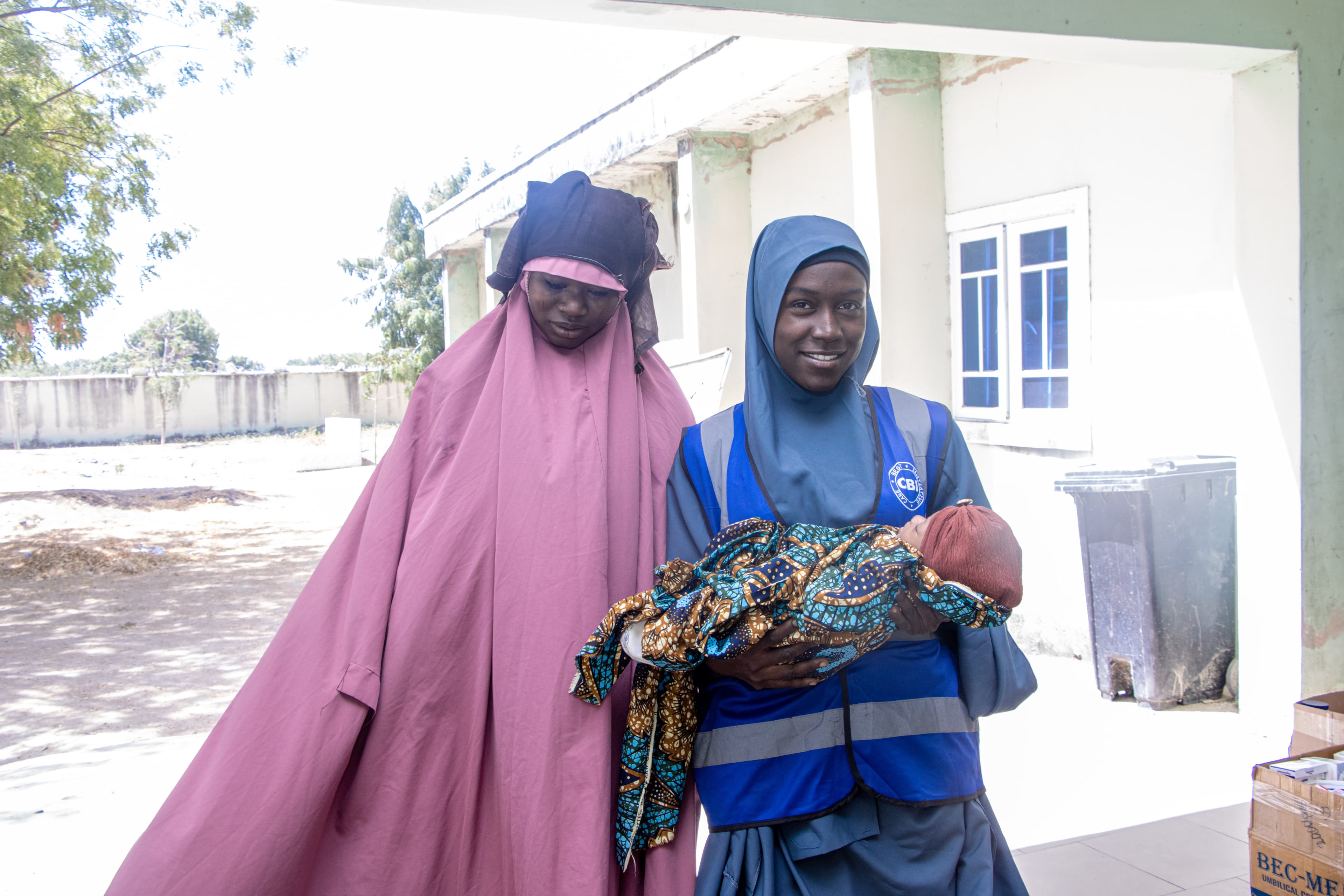
Sometimes the difference between life and loss is one trained worker who arrives on time.
Amina is 24 years old and lives in a small village in Adamawa State where the nearest health facility is 38 kilometres away on an unpaved road. Like most women in her community, she had given birth to her first child at home, attended by a traditional birth attendant with no formal training. That birth was difficult. Her second pregnancy brought new fears.
Through CBI's community health worker network, Amina was registered for antenatal care in her second trimester. A trained CBI midwife visited her village monthly, conducting blood pressure checks, iron supplementation, malaria prophylaxis, and birth preparedness counselling. When Amina showed signs of pre-eclampsia at 34 weeks, her CHW — who had been trained to recognise danger signs — arranged an emergency referral to the state hospital within hours.
Amina delivered a healthy baby girl by caesarean section. She named her Zara. When our monitoring team visited three months later, both mother and baby were thriving. "The health worker came to my village," Amina said. "Without her, I don't know if my baby would be here today."
In 2024, CBI's Maternal and Newborn Health programme conducted over 10,000 antenatal care consultations, supported 1,800 supervised deliveries, and provided postnatal care follow-ups to more than 3,400 mother-infant pairs. Behind each of these numbers is a story like Amina's — a life balanced on the edge of access, and a system that reached just in time.
We share Amina's story with her full permission. Protecting the dignity of the people we serve is central to how we work — and how we tell the world about what is happening in these communities.